
UK Heatwaves and Subsidence: How Hot Weather Can Affect London Homes and Conservatories
- by Bhavi Bhudia
- Hits: 135
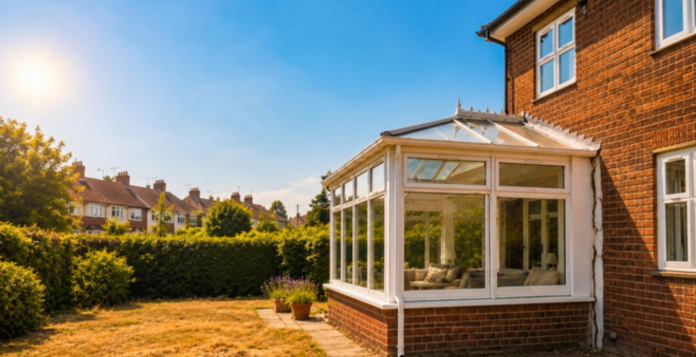
Periods of prolonged hot and dry weather can affect UK properties, particularly homes built on shrinkable clay soils.
This is especially relevant in London and parts of the South East, where clay-rich ground is widespread.
When clay soil dries, it can lose moisture and shrink. If the ground supporting a property's foundations moves, the building above can also move. In some cases, this results in subsidence or differential movement.
One of the first places homeowners may notice this is where a conservatory or later extension joins the original house.
A crack or gap does not automatically mean the whole property is subsiding, but it should not simply be ignored.
Can Hot Weather Cause Subsidence?
Yes.
Prolonged periods of hot, dry weather can contribute to subsidence where properties are built on shrinkable clay.
The basic process is:
Hot, dry weather → clay loses moisture → clay shrinks → ground moves → foundations may move.
The British Geological Survey identifies shrink–swell clay as an important ground hazard in parts of Britain, including London.
The amount of movement depends on factors including:
soil type;
foundation depth;
rainfall;
drainage;
nearby trees and vegetation;
previous ground conditions; and
the construction of the property.
Not every property built on clay will experience subsidence, but prolonged drought can increase the risk.
Why Can a Conservatory Pull Away From the House?
A common problem is a conservatory appearing to separate slightly from the original building.
This can happen because the house and conservatory may have different foundations and respond differently to ground movement.
It is not technically correct to say that all conservatories have shallow foundations.
A properly constructed conservatory should have foundations suitable for its ground conditions and structural load.
However, many older conservatories were built under circumstances where they were exempt from significant parts of the Building Regulations. Construction standards and foundation depths can therefore vary considerably.
The original house may have much deeper foundations than a later conservatory.
If clay beneath both structures shrinks during prolonged dry weather, the conservatory may move differently from the main house.
This is known as differential movement.
Signs may include:
cracking where the conservatory meets the house;
doors suddenly sticking;
windows becoming difficult to open;
movement between skirting and floors;
cracks through brickwork;
uneven flooring; or
a visible gap opening between the two structures.
Do Trees Make Subsidence Worse?
They can.
Large trees and shrubs draw moisture from the ground.
Where a property is built on shrinkable clay, vegetation can contribute to soil drying, particularly during periods of low rainfall.
The combination of:
Clay soil + drought + high temperatures + water-demanding trees
can increase the potential for movement.
However, homeowners should not immediately remove nearby trees.
Suddenly removing established vegetation can change ground moisture levels and, in some circumstances, contribute to the opposite problem heave, where clay rehydrates and expands.
Tree removal in a suspected subsidence case should therefore be based on appropriate professional advice.
What Should You Do If a Conservatory Is Pulling Away?
The most important first step is to establish whether the movement is continuing.
1. Photograph the Crack
Take clear photographs showing both the location and size of the crack.
Place a ruler or crack-width gauge next to it to provide scale and record the date.
For example:
24 August 2026 — approximately 2mm
Repeat the photograph periodically from approximately the same position.
This can help establish whether the crack is:
stable;
widening;
closing; or
moving seasonally.
Simple photographic monitoring is useful evidence but does not replace professional structural monitoring where significant movement is suspected.
2. Don't Immediately Fill the Crack
If you immediately fill and decorate over a moving crack, you remove useful evidence.
The first question should be:
Why has it moved?
The cause should ideally be established before cosmetic or structural repairs are carried out.
3. Check the Rest of the Property
Look for other signs of movement, including:
sticking doors;
distorted window frames;
internal cracks;
external cracks;
gaps around skirting;
uneven floors; and
changes in roof or conservatory-frame alignment.
A single small crack at the junction between two different structures can have a very different significance from widespread progressive cracking.
4. Check Drainage
Not all subsidence is caused by hot weather.
Leaking drains and underground pipes can also affect the soil supporting foundations.
Where significant movement is suspected, investigations may include:
CCTV drainage surveys;
trial holes;
foundation inspections;
soil testing; or
structural monitoring.
Should You Water the Ground to Rehydrate the Clay?
No. Homeowners should not deliberately soak the ground around their foundations in an attempt to reverse clay shrinkage.
Although it may seem logical to add water to dry clay, ground behaviour is much more complicated.
Artificial watering can create uneven moisture conditions around different parts of a building and may cause further differential movement.
Water may also:
migrate unpredictably;
soften surrounding ground;
affect drainage;
create localised swelling; or
mask the underlying problem.
Suspected subsidence should be properly investigated rather than treated by soaking the soil with a hose.
Can You Simply Pin the Conservatory Back to the House?
Sometimes structural connections can form part of a repair, but pinning the structures together is not a universal solution.
If the conservatory foundation is continuing to move, attaching it more firmly to the original property without addressing the underlying cause could transfer structural forces into the house.
Depending on the diagnosis, professional repairs might include:
crack stitching;
rebuilding sections of masonry;
improved structural connections;
drainage repairs;
foundation strengthening;
underpinning;
piling; or
reconstruction of the affected structure.
The appropriate solution should follow diagnosis rather than precede it.
Should You Contact Your Buildings Insurer?
If you believe the movement could be subsidence, contacting your buildings insurer before undertaking major structural repairs is generally sensible.
Depending on the policy and circumstances, the insurer may appoint:
a loss adjuster;
building surveyor;
structural engineer;
drainage specialist; or
other appropriate expert.
Buildings insurance commonly covers subsidence damage, but cover is not automatic in every case.
The insurer will usually consider:
the cause of the movement;
the wording of the policy;
whether the conservatory is part of the insured building;
the adequacy of its construction; and
whether any policy exclusion applies.
Older or inadequately founded conservatories can create more complicated insurance issues where defective design or construction is considered to have contributed to the problem.
Homeowners should therefore check their individual policy rather than assuming either that the claim will definitely be covered or definitely excluded.
Does Subsidence Always Mean Underpinning?
No.
Subsidence does not automatically mean that a property requires underpinning.
The correct repair depends on what caused the movement.
Possible solutions may instead include:
drainage repairs;
appropriate vegetation management;
monitoring until movement stabilises;
masonry repairs; or
another engineered solution.
Underpinning is normally considered only where it is technically necessary.
A Simple Homeowner Monitoring Record
Keeping written evidence can be useful.
| Date | Location | Crack Width | Observation |
|---|---|---|---|
| 24 Aug 2026 | Conservatory/house junction | 2.0mm | First measurement |
| 7 Sept 2026 | Same position | 2.3mm | Slight increase |
| 21 Sept 2026 | Same position | 2.5mm | Door becoming tighter |
Photograph the same area each time.
Where movement appears significant or progressive, a surveyor or structural engineer may recommend professional crack gauges or level monitoring.
When Should You Obtain Professional Advice?
Consider speaking to your insurer, a Chartered Building Surveyor or structural engineer where:
a crack is getting noticeably wider;
the conservatory is visibly separating from the house;
cracks pass through brickwork;
doors and windows have suddenly become difficult to operate;
floors appear to have moved;
structural distortion is visible; or
cracks repeatedly return after repair.
The objective is to determine whether the movement is historic, seasonal, progressive or structurally significant.
Selling a Property That Has Had Subsidence or Movement
A history of structural movement does not automatically make a property unsaleable.
Documentation is important.
Homeowners should retain:
engineer and surveyor reports;
insurance correspondence;
drainage reports;
monitoring records;
repair specifications;
invoices;
guarantees; and
evidence that movement has stabilised.
For buyers and mortgage valuers, a properly investigated and professionally repaired problem is usually easier to assess than unexplained cracks that have simply been decorated over.
Elite International Real Estate's Advice
The biggest mistake is assuming either:
“Every crack means subsidence.”
or:
“It's only a crack, so I'll fill it and forget about it.”
The better approach is:
Observe → Record → Investigate → Diagnose → Stabilise → Repair
If movement appears after prolonged hot weather — particularly where a London property is built on clay — photograph it, monitor it and establish the cause before carrying out significant repairs.
And importantly:
Do not deliberately soak the soil, remove large trees without advice, or simply pin a moving conservatory back to the house without understanding why it moved.
Elite's Quick Checklist
If you notice movement after a prolonged period of hot weather:
Photograph the crack.
Place a ruler beside it and record the width and date.
Monitor whether it changes.
Check inside and outside the property.
Check doors and windows for new sticking or distortion.
Look for obvious drainage or water leaks.
Record nearby trees and large vegetation.
Do not soak the ground around the foundations.
Do not undertake major structural repairs before diagnosis.
Contact your buildings insurer and obtain qualified professional advice where structural movement is suspected.
About Elite International Real Estate
Elite International Real Estate Ltd is an independent UK estate agency and property consultancy established in 2006, providing residential sales, lettings, property management, project management and property advisory services.
Working across London and the wider UK property market, Elite advises homeowners, landlords, investors and developers on property transactions and property-related projects.
Global reach, real results. Established since 2006.
Authoritative UK References
This guidance has been informed by published information from:
British Geological Survey (BGS);
Royal Institution of Chartered Surveyors (RICS);
Association of British Insurers (ABI);
NHBC;
Planning Portal; and
Financial Ombudsman Service.
Important: This article provides general property information and is not a substitute for structural engineering, surveying, geological, insurance or legal advice. Every building and insurance policy is different. Where significant movement is suspected, homeowners should obtain advice from appropriately qualified professionals.